The Quiet After the Last Line
The quiet after the last line can make an ending feel complete. Shape its duration, focus and release so applause arrives without breaking the moment.
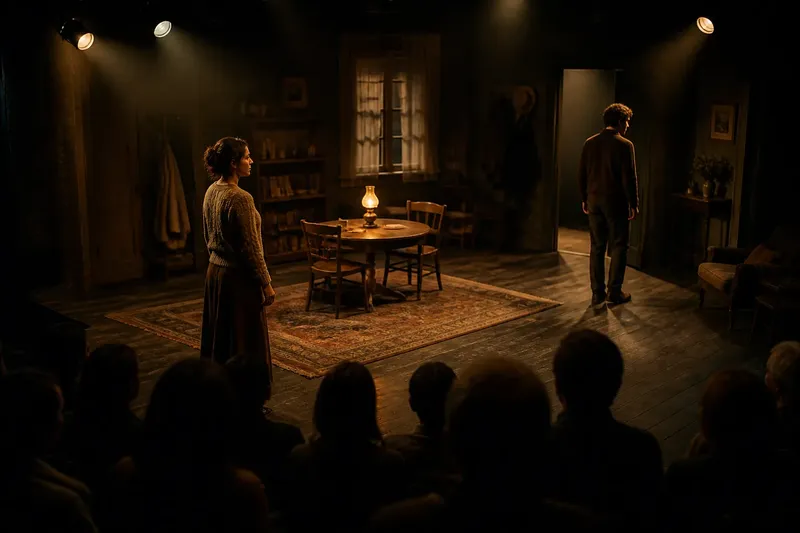
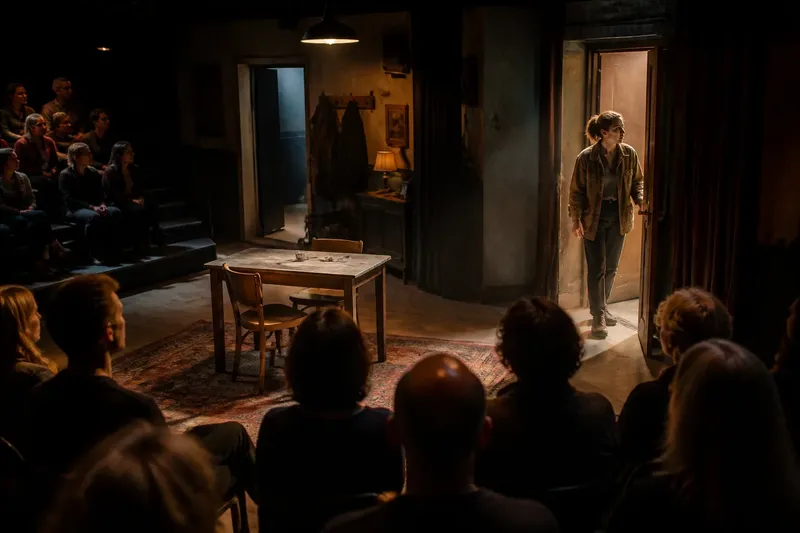
How long should the quiet after the last line last before the audience applauds? In a small performance, the answer depends less on a stopwatch than on what the audience still needs to see or hear. A held silence can let a loss register, leave a question open, or simply make room for the last image to settle. It can also become an awkward pause if the performers appear to be waiting for a cue.
Think of the ending as a door that closes gently rather than a switch that cuts the story off. The final line, the silence and the first movement towards applause each have a job. A week of focused rehearsal can help a small company distinguish those jobs and choose a release that feels deliberate without demanding that the audience behave in a prescribed way.
Begin the week by deciding what the silence is for
At the first table session, read the final section aloud and agree on the change the silence should allow. Be precise. Does the character’s choice need to land? Should the audience remain with an unresolved image? Is the final sound meant to fade into the room, or should the sudden absence of sound be felt?
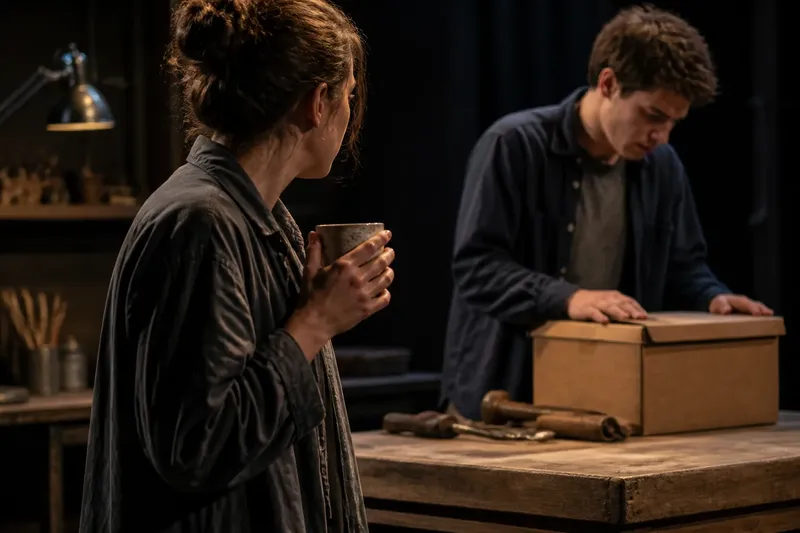
These are different endings, and they call for different attention. If the story resolves a conflict, silence may let the audience recognise what has changed. If it ends on uncertainty, a prompt release can wrongly suggest that the question has been answered. If the ending rests on a sound—a cup placed down, a door latch, a breath—the silence may begin only after that sound has finished travelling.
Write a plain sentence in the rehearsal notes describing what the audience should be able to notice during the pause. Avoid instructions such as “make it emotional”. A playable intention is more useful: the character continues to look at the empty chair; the others do not rescue them from that sight. The aim is not to make every spectator feel the same thing. It is to give their attention somewhere clear to go.
Use the middle days to find the audience’s focus
On the next rehearsal day, work through the final moments without stopping to discuss each beat. Let the performers follow the text and the stage action as written. Then try the ending again with the last line followed by stillness, without adding a new gesture to signal that the audience should wait.
Notice where attention naturally settles. It might rest on the speaker’s face, a shared object, a doorway, or the empty space left by someone who has gone. The silence does not need to make the whole stage motionless. A performer may finish an action, a curtain may shift in the draught, or a sound from outside may remain audible. What matters is whether these details deepen the ending or pull attention away from it.
Try a second version in which the performers soften the image: a gaze lowers, a hand releases an object, or bodies turn slightly towards the exit. Compare what each version asks of the audience. A held image can leave people inside the story; an easing of posture can quietly tell them the scene has finished. Neither is inherently better. Choose according to the effect the final line and the preceding action have prepared.
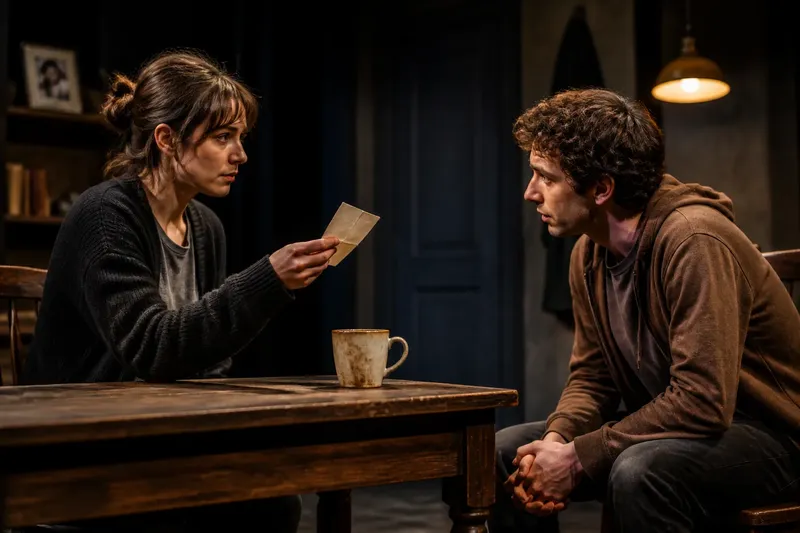
Imagine a two-person scene ending with one character saying, “I’ll leave the lamp on.” In rehearsal, the actors first hold their positions while the lamp remains lit; the expected observable result is that attention stays with the promise and the shared room. In another pass, one actor turns away immediately after the line; the expected result is a clearer cue that the scene has ended, but perhaps less time for the promise to register. The company can compare these versions and decide which better fits the story, rather than treating a longer pause as automatically deeper.
Shape the pause without turning it into a signal
By the middle of the week, settle the sequence of events. Rehearse the last line, the final action, the silence and the first release as separate beats. The release might be an actor leaving the image, a lighting change, a musical tail reaching its end, or an ordinary shift in posture. If the production has no lighting or sound cue, a performer’s clear physical choice can do the work.
Agree what the performers are attending to during the pause. They might keep listening to the room’s last audible sound, maintain their focus on a particular point, or simply remain in the consequence of the scene. This gives stillness an active centre. It also reduces the temptation to glance towards the audience, search for approval or count seconds visibly.
Use time only as a rehearsal aid. A stage manager can note how long the pause seems to last in different runs, but the company should judge it by its effect: does the central image remain legible, and does the eventual release feel connected to the story? A fixed count can help performers learn the shape, much as a kitchen timer helps keep a simple task on track, but the timer is not the reason to end the pause.
Check the ending from different seats and conditions
Later in the week, invite a small group to watch the final scene from different parts of the playing space. Ask what they noticed during the quiet and what told them the story had ended. Their answers are observations, not a vote on whether the ending is “right”. If several people miss the image the performers meant to hold, the focus may need clarifying. If they disagree about what the image means, that ambiguity may be the point.
Also rehearse with the conditions the show will actually use. A close, quiet room can make a breath or a cloth movement unusually prominent. A venue with ventilation, street noise or a creaking floor will never be acoustically empty. There is no need to imitate silence by adding a conspicuous sound cue. Instead, listen for what the room contributes and decide whether performers should accommodate it or leave it alone.
On the final rehearsal day, run the whole ending without interruption, including the transition into the company’s next action. If performers remain in character for a bow, agree how the shift from story to acknowledgement will happen. If they leave the stage first, make sure the exit does not accidentally become a second ending. The audience needs a recognisable release, but it need not be a verbal announcement.
How should the pause work in different endings?
Should the pause have a fixed length?
Use a count as a rehearsal reference if it helps performers stay together, then check whether the pause serves the scene in performance. A fixed duration can feel strained when the audience has already received the ending, or too brief when an essential image has not yet registered.
What if the audience applauds straight away?
Let the applause come. Performers can acknowledge it through the show’s planned transition rather than trying to restore a silence that the audience has already ended. The pause is an invitation to attend, not a demand that spectators wait for permission to respond.
Can there be sound during the final silence?
Yes, if the sound belongs to the world of the ending or helps shape the audience’s attention. A settling object, a breath or the room’s ambient noise may remain; adding a sound merely to decorate the pause can make it feel like another line of dialogue.
How can performers avoid looking as if they are waiting?
Give each performer a specific focus that follows from the scene, and rehearse the physical release that ends the hold. Attention directed towards a person, place or unresolved action reads differently from watching the audience for a response.
Keep the silence responsive in performance
During the run, preserve the intention but allow the room to answer in its own way. Applause may begin quickly, arrive after a shared breath, or not come at all before the performers move on. No response should be treated as a failed cue. The company’s task is to complete the performance clearly, not to extract a particular reaction.
If the ending repeatedly feels rushed, return to the final image and ask whether the audience can actually see or hear what it is meant to hold. If it feels overextended, examine whether performers are adding a second pause after the story has already released them. The quiet after the last line works best when its beginning is audible or visible, its focus is specific, and its end belongs to the same dramatic thought.
Keep the rehearsal note that names the audience’s focus, rather than a rule that prescribes a duration. On another night, room noise or a different audience response may alter the feel of the moment; the chosen focus gives performers something stable to return to. That is the practical value of planning the quiet after the last line: it leaves space for an ending to arrive without asking the silence to explain it.